Mrs. Gascoyne
The Curious Incident of the Dog in the Night-TimeMrs. Gascoyne, the headmistress of Christopher’s school, is the official whose decision determines whether he can attempt an A-level in mathematics before any pupil at the school has done so. Her initial refusal gives institutional force to the obstacle Christopher faces; her eventual agreement, following Father’s insistence and a practical offer of support, makes the examination possible.
Identity and Role
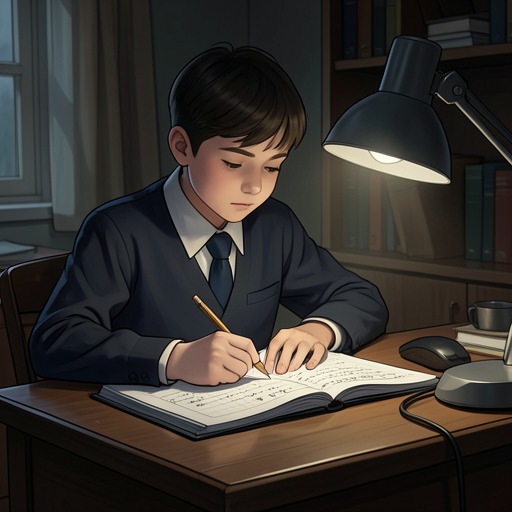
Mrs. Gascoyne appears in the account as a school authority rather than as a figure with a separately developed personal history. Her role is specific and consequential: she controls the school’s response to Christopher’s request to take an advanced examination, and her decision affects whether his mathematical ability can be recognized through a formal qualification.
The A-Level Dispute
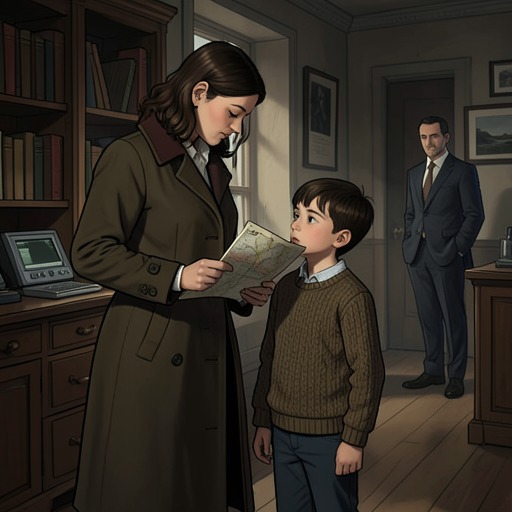
Christopher recounts sitting in Mrs. Gascoyne’s office with Father while she explained why the school did not want him to take an A-level. She first said the school lacked the facilities. She also argued that treating Christopher differently from the other pupils might lead everyone to ask for different treatment and set a precedent; in her view, he could wait until he was eighteen to take A-levels.
The exchange turns on a tension between uniform treatment and Christopher’s particular opportunity. Father challenges the delay in front of Christopher, arguing that he is already getting a poor deal and that mathematics is the one thing he is really good at. When Mrs. Gascoyne suggests that she and Father discuss the matter privately later, Father asks her to state her concerns in Christopher’s presence. She says she has nothing she is embarrassed to say, and Father insists that she say it then. The conversation thus makes Christopher a participant in the decision about his own education rather than an absent subject of it.
Conditions and Reversal
Mrs. Gascoyne identifies a concrete condition for the examination: Christopher would need a staff member to supervise him alone in a separate room. Father offers to pay someone £50 to do this after school and says he will not accept a refusal. Mrs. Gascoyne does not decide immediately; she says she will think about it.
The following week, she telephones Father at home and agrees that Christopher can sit the examination. The Reverend Peters will act as the invigilator. The reversal does not erase the school’s initial objections, but it converts them into an arrangement that permits Christopher to proceed: separate supervision, a separate room, and a named invigilator.
Significance
Mrs. Gascoyne’s decision connects Christopher’s ambition to the practical structures that can either restrict or enable it. Christopher intends to prove that he is not stupid by taking mathematics and earning an A, and he imagines going on to further mathematics, physics, and university. The school’s reluctance threatens to postpone that plan; its eventual accommodation gives the immediate examination a route forward.
Her part in the episode is defined by a shift from caution about resources and precedent to consent under specified conditions. The scene also contrasts institutional hesitation with Father’s determined advocacy: the examination becomes possible not through a general change in school policy, but through a tailored arrangement and a commitment to fund the extra supervision.